
DIEP Flaps.
About the procedure
What is a DIEP Flap?
A DIEP flap involves using skin and fat from the lower abdomen to re-create a breast. Most people have some excessive skin and fat in the lower tummy that can be removed. The patient gets a tummy tuck/ abdominoplasty in return for a breast. The surgery is complex and involves microsurgery of blood vessels to re-attach the tummy tissue to the breast. We also combine surgery to the other breast, if desired, to achieve immediate symmetry The surgery can be done at the same time as the mastectomy or at a later date. The surgery can be performed safely before or after radiotherapy.
Following a DIEP flap, most patients will go on to have further “smaller” surgeries to complete their reconstruction. This includes nipple reconstruction, lipofilling to improve symmetry of the breasts, and liposuction of the tummy area.
Autologous reconstruction has the benefit of avoiding an implant, and instead uses your own tissue that is soft and warm. Because it is your own tissue it will grow with you as you age and your weight changes. The surgery very rarely requires any touch up surgery in the later years and no maintenance scans are required. Research consistently ranks the DIEP higher than implant-based reconstruction in terms of longevity and quality of life improvement.
The downside of autologous reconstruction is that it is a long operation and you must be reasonably fit to go through it. People who smoke, have a high BMI or multiple medical problems are usually not eligible for this type of surgery. It is a big operation but ERAS enhance recovery protocols have revolutionised how patients recover following this type of surgery. Patients are up and about the following day and are often safe to go home day 2.
Tummy scars, and previous breast reconstruction are not contraindications to this surgery.
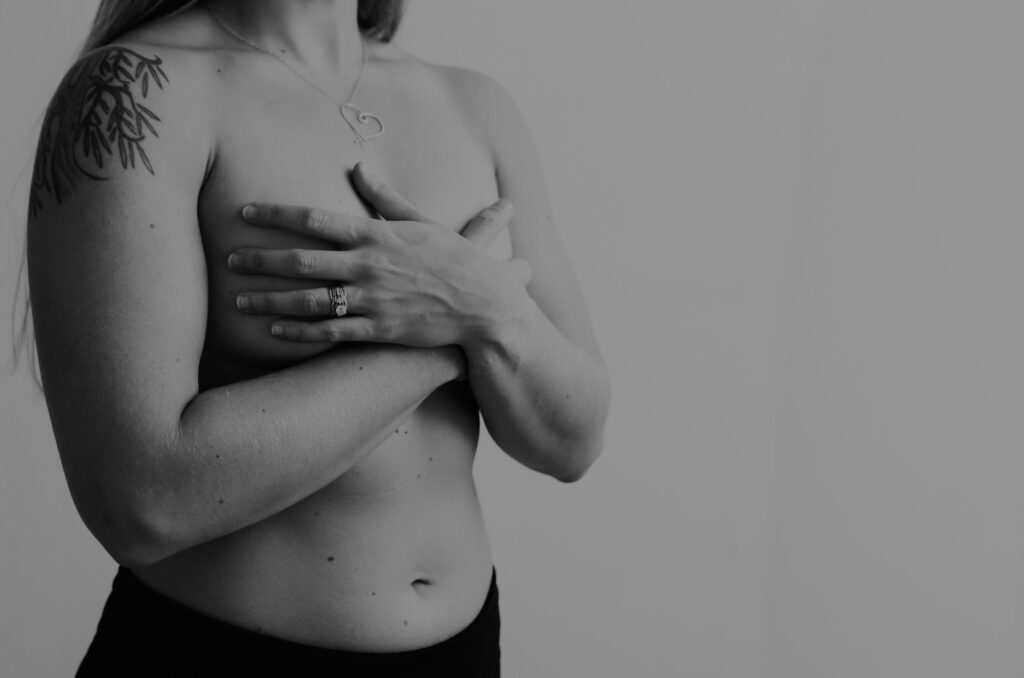
Who is DIEP Flaps for?
Procedure Overview.
PROCEDURE TIME
6-8 hours.
HOSPITAL TIME
2-3 days.
WORK OFF TIME
6 weeks.
NO gym FOR
4 weeks.
NO DRIVING
2 weeks.
GARMENT
4 weeks.
FOLLOW UP
NHS Only.
The Consultation.
This type of surgery is only offered in my NHS practise so you will need your GP or clinician to send a referral letter to Pinderfields Hospital. Your first consultation will involve a thorough history and examination and a presentation of the surgery including photos of post-operative results. We will then explain the enhanced recovery protocol our unit employs and give you some advice on what you can do to optimise your chance of success. We work closely with the Keeping Abreast charity to ensure you have lots of support to help you make an important decision. All potential patients will have a CT scan to check they are suitable for a DIEP flap. If this is OK, we will book your surgery. Patients seeking delayed reconstruction are always seen twice prior to booking for surgery. You are then seen by the team a final time a few weeks prior to surgery to answer any questions, complete your consent form, and prepare you for surgery. Throughout this entire process you are supported by our Macmillan specialist breast reconstruction nurse who offers a one-to-one service.

The Planning.
Pre- operatively you will be given a medicated body wash to use daily for 5 days prior to the surgery. You should not shave 24 hours before surgery. You will be given high calorie energy drinks to take 3 times a day for 2 days prior to surgery. You will have another high calorie drink on the morning of surgery.
This is a good opportunity for a friend to come for support. We advise no holiday abroad within two months of surgery.

The Procedure.
You will attend the hospital for 7am having had water and a special energy drink at 6am. Your surgery will be all-day and we will give your chosen person a call any the end of the procedure to let them know you are OK. You will be in hospital for 2-3 days. The first 48 hours are critical for the survival of the flap so the nursing team will be checking on you regularly and inspecting the flap. The physiotherapists will have you mobilising the following day and getting you independent. We use the latest warming devices, no drains and no dressings. You are seen at least twice daily by the medical team in your own side room with an en-suite. On day 2 you can shower.

The Aftercare.
Patients are seen weekly for 3 weeks and then at 6 weeks. You will have regular photographs and be asked to complete numerous feedback questionnaires and outcome reports to help improve our service. We are very privileged to have our very own breast reconstruction nurse who will be your direct point of contact and will oversee your entire recovery alongside the surgical team

Patient reviews
Patient Reviews
 5.0
from 88 verified reviews
5.0
from 88 verified reviews
 iWantGreatCare Certificate of Excellence 2025
Ready to take the next step?
Join hundreds of patients who’ve trusted Mr Holmes with their care. Consultations in York and Leeds.

Patient Reviews
My Holmes was great from start to finish. He explained, in full, what the procedure entails and what to expect after the operation. Everything went great with the operation and the support from him and his staff was fantastic prior, during and after. I’m amazed how good my reconstructed breast looks and he even created me a nipple on a separate operation after just for it to look as “normal” as possible. With all his help and work I feel like a new woman and would highly recommend him to anyone.


My approach
Procedure risks.
Immediate Risks.
- Bleeding – if significant it may require a return trip to theatre
- Infection – usually develops around week 2-3 and requires a short course of oral antibiotics
- Poor scarring – The scars are well hidden but can become lumpy, stretched, discoloured or raised.
- Flap loss – this is currently 4-5% in our unit.
- Emergency return to theatre to check flap – approx 10%
- DVT/PE/MI – these are rare and are mitigated with blood thinning injections, specialised stockings, calf pumps. And early mobilisation.
- Abdominal bloating – This is transient and usually resolves once the bowels open around day 4-10.
Early Risks.
- Seroma – This is a build up of fluid in the tummy that causes swelling and tenderness. It may require drainage with a syringe in a clinic room
- Delayed wound healing – especially at the tummy where the wound is tight. Treatment is with topical dressings.
- Dog ears – this refers to bulging at the ends of the tummy scar.
- Belly button change in appearance or necrosis
- Lymphoedema – this risk is related to the cancer surgery in the armpit
- Fat necrosis – sometime lumps or oil cysts develop in the reconstructed breast following surgery. These often settle with time but if persist may need corrective surgery or drainage.
Late Risks.
- Bulge or hernia – rare and mitigated with the use of an absorbable mesh at the time of surgery
- Unsightly scars – these can be tidied-up with a small operation
- Asymmetry is common. Some patients request further surgery to improve size/projection of their reconstructed or other breast to achieve better symmetry
- Chronic pain – rare
- Abdominal discomfort – this can be present whilst the tummy muscle heals and may take up to 3-4 months to resolve.

Interested in a consultation?
If you are interested to learn more, and would like to come for a face-to-face or virtual chat, please send me and my team a message, and we can get in touch to arrange your consultation.


